
Social Navigation in High School: How to Find Your People

Part 2 of our student-created series, How to Nail High School
Co-authored by Frolific Innovation for Leadership Students: Allen Peralta, Basheer Qutob, Ishika Sujith, Jessica Kochhar, Nandana Krishnan, Navya Neelam, Pranay Srikantapuram, Priya Mathur, Shree Doshi, Srilasya Sanivarapu, Vihaan Joshi.
In our Innovation for Leadership module at Frolific, students solve a real-world problem that is directly applicable to their lives using Stanford’s design thinking approach to problem solving. The power of this approach is that students do not begin with assumptions. They do not sit in a room and guess what people need. They research the real problem through interviews, identify patterns, design a solution, test that solution, and then improve it through iteration.
This semester, our students chose a problem that matters deeply to students and families in Forsyth County, GA: How can we make the transition to high school easier?
To understand the problem, they first interviewed high school students and asked them what made the transition harder than expected. Then they interviewed middle school students to understand what they did and did not know before entering high school. When they compared both groups of interviews, they found three major gaps: academic readiness, social navigation, and system confusion.
This blog post was created from our students’ findings. These are not random tips pulled from the internet. These are student discoveries from real conversations with real students in Forsyth County. Our students wanted to share what they learned with the wider community so rising ninth graders, current high schoolers, and parents could benefit from the advice they gathered.
This is Part 2 of the series, and it focuses on something students said can feel just as overwhelming as academics: social navigation in high school. Students talked about changing friendships, bigger schools, new social circles, clubs, upperclassmen, teachers, and the quiet fear of not knowing where they belong.
Please feel free to forward this to any rising ninth grader, high school student, or parent in your life. Sometimes the best advice comes from the students who are already walking the path.
Why Social Navigation in High School Feels So Different
One of the biggest findings from our student interviews was that many rising ninth graders underestimate how different the social world of high school can feel. Students may know that high school will be bigger, but they do not always understand what “bigger” means until they are actually inside the building, moving through different classes, meeting new people, and realizing that the familiar rhythm of middle school has changed.
In middle school, friendships often feel more automatic because students may see the same people in the same classes, hallways, lunch periods, and routines. Even when middle school has its own social challenges, there is usually some comfort in familiarity. Students know who sits where, who talks to whom, and which groups already exist.
High school changes that familiar map. Friends may take different classes, choose different pathways, join different clubs, play different sports, or find themselves drawn to new interests. Students who once saw each other constantly may suddenly see each other only once in a while, and that shift can feel confusing if no one has prepared them for it.
This was one of the most important messages high schoolers wanted younger students to hear: middle school friendships may change, and that does not mean something has gone wrong. High school can feel like a loss at first, but it can also become a chance to start over, meet new people, and discover friendships that fit the person a student is becoming.
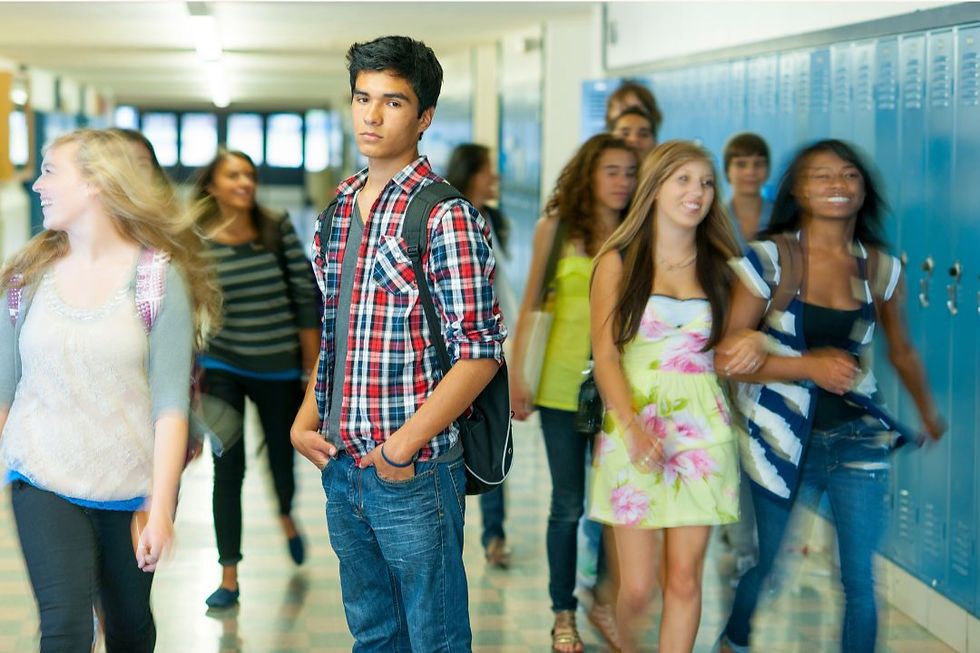
Middle School Friends May Change
One student finding that came up strongly was that middle school friendships do not always carry into high school in the same way. For many students, this can be one of the most emotional parts of the transition because friendships are not just about who someone talks to at lunch. They are tied to belonging, identity, comfort, and the feeling of having a place.
Students may enter ninth grade assuming their middle school group will stay exactly the same. Then the school year begins, and everyone’s schedule starts pulling them in different directions. One friend may become busy with marching band, another may take a different academic track, another may join a new club, and another may begin spending time with students from a different middle school.
High schoolers wanted younger students to know that this shift can feel personal even when it is not personal. A changing friendship does not always mean rejection. Sometimes it simply means students are growing, exploring, and being placed in new environments that change their daily patterns.
This matters because students who cling too tightly to the idea that their middle school friendships must stay exactly the same may miss the new connections forming around them. The goal is not to abandon old friends, but to stay open enough to let high school friendships grow too.
A Bigger School Can Be Intimidating, But It Also Creates More Possibility
Another pattern students noticed was that a bigger school can make students feel invisible at first. A student who felt known in middle school may suddenly feel like one person in a sea of faces. That can be intimidating, especially for students who are quieter, more cautious, or unsure how to enter new social spaces.
At the same time, students also found that a bigger school creates more opportunity. There are more people to meet, more personalities to discover, more clubs to try, and more chances to find students who share similar interests. The size of high school can feel overwhelming, but it also means a student is not limited to the same small social circle forever.
This was one of the most hopeful findings from the interviews. High schoolers did not describe the bigger social world only as a problem. They described it as a place where students can reinvent themselves, become more open, and find friendships that may not have been available in middle school.
The challenge is that students often need to participate in that process instead of waiting for connection to happen automatically. Friendship may look effortless from the outside, but high schoolers repeatedly said that students usually have to take small steps toward others before they begin to feel socially comfortable.

Students May Need to Make the First Move
A major finding from the interviews was that many students want connection, but they do not know how to begin. They may want to talk to new people, but they worry about seeming awkward, needy, annoying, or strange. This fear can keep students silent, even when they are surrounded by people they might actually enjoy knowing.
High schoolers explained that students cannot always wait for others to come to them. Some students are lucky and quickly find a group, but many students have to practice reaching out first. That does not mean they need to become loud or pretend to be someone they are not. It means they need to learn how to create small openings for connection.
Those openings can be simple. A student can compliment someone’s shoes, ask about an assignment, mention a club meeting, comment on something that happened in class, or ask whether someone understands a project. These small moments may not turn into instant friendship, but they create familiarity, and familiarity is often where friendship begins.
This is where students’ communication skills matter. In Frolific, students practice the ANCHOR technique to help them start conversations, show interest, ask thoughtful questions, and continue a conversation with more confidence. The bigger lesson is that social confidence is not something students either have or do not have. It is a skill that can be practiced in small, repeated moments.
Breaking Into Social Circles Takes Courage and Strategy
One of the most honest concerns students shared was the fear of breaking into existing social circles. Many students worry that everyone else already has a group, and that trying to join a conversation will make them look like they are forcing themselves in. This fear can be especially strong in high school because students may see groups forming quickly and assume there is no room for them.
High schoolers suggested that students start with low-pressure connection rather than trying to force instant closeness. A genuine compliment can be a simple and respectful way to begin. A student can notice something positive about another person’s presentation, outfit, idea, or effort. Compliments work well because they create warmth without demanding too much from the other person.
Students also recommended participating in class as a social strategy, not just an academic one. Raising a hand, answering a question, or contributing to a discussion helps classmates recognize a student’s presence. When people hear a student’s voice regularly, future conversations often feel less random and less intimidating.
This is also why joining clubs matters so much. Clubs give students a shared reason to talk. Instead of trying to invent a conversation from nothing, students can connect around a shared activity, interest, event, or goal. A club gives students repeated exposure to the same people, and repeated exposure is one of the easiest ways for comfort and friendship to grow.
Clubs Can Help Students Find Their People
One of the clearest pieces of advice from high schoolers was that students should join clubs early, even if they feel nervous at first. Clubs help students meet people beyond their classes and give them a structured place to belong. This is especially helpful in a large high school where students may not naturally run into the same people every day.
Students said clubs are valuable because they create repeated contact. A student may not become close to someone after one conversation, but seeing the same students week after week makes connection feel more natural. Over time, small conversations can turn into shared jokes, shared responsibilities, and eventually real friendships.
Clubs can also help freshmen connect with upperclassmen, and this came up as an important part of the transition. Upperclassmen often know how the school works in a way freshmen do not. They may understand which events are worth attending, which classes require extra preparation, how certain teachers structure assignments, and which opportunities students should know about earlier.
This makes clubs more than a social activity. They can become a support system. When students join clubs, they are not only meeting peers their own age. They are also gaining access to students who are a few steps ahead and can help make high school feel less confusing.

Teachers Can Also Help Students Feel More Connected
Although students often think about social navigation only in terms of friendships, the interviews showed that teachers also play an important role in helping students feel connected in high school. Teachers are not just people who assign grades. They can also become guides, resources, advocates, club sponsors, and trusted adults who help students find opportunities.
Several students said that teachers can seem more intimidating while they are teaching than they are in real life. In front of a classroom, a teacher may appear strict, serious, or unapproachable. But when students speak to teachers respectfully outside of those moments, they often realize that teachers are more human, helpful, and approachable than they assumed.
This was an important student insight: students should not project their fear onto teachers before they have tried to connect with them. A student may assume a teacher will be annoyed by a question, but the teacher may actually appreciate the effort. A student may assume a teacher has not noticed them, but participation and respectful communication can help the teacher begin to see the student more clearly.
Building rapport with teachers also matters because teachers often hold important roles beyond the classroom. They may sponsor clubs, recommend students for opportunities, write recommendation letters, or help students understand where they could get involved. When students learn to communicate with teachers early and respectfully, they are also learning how to advocate for themselves in a bigger system.

Speaking Up Helps Students Become Known
Another student finding was that answering questions in class can help students become more visible. This may feel uncomfortable at first, especially for students who are worried about being wrong or being noticed. But high schoolers pointed out that participating in class helps both teachers and classmates begin to recognize a student’s voice.
This does not mean students need to answer every question or perform confidence they do not feel. It means that speaking up occasionally can help students practice being seen. High school includes many moments that require communication, including presentations, group projects, interviews, club leadership, and conversations with adults. Raising a hand in class is one small way to begin building that confidence.
Students also connected this to public speaking. The more students practice using their voice in low-stakes moments, the less frightening higher-stakes moments may become. A student who participates in class is not just answering a question. They are practicing presence, courage, and communication.
This is why social navigation is not separate from leadership. Students who learn to speak up, connect with others, approach teachers, and join communities are also learning how to move through the world with more confidence and initiative.

Social Confidence Is Built Through Small Brave Steps
One of the most important patterns in the student findings was that social confidence does not usually arrive all at once. Many students wait to feel confident before they take action, but high schoolers suggested that the process often works the other way around. Students become more confident because they take small social risks and survive them.
That first club meeting may feel awkward. The first conversation with a new classmate may feel stiff. The first time raising a hand may feel uncomfortable. The first time approaching a teacher may feel intimidating. But those moments become easier when students repeat them.
This is an important message for both students and parents. Social growth is not always dramatic from the outside. Sometimes it looks like a student staying after class to ask one question, walking into a club meeting without knowing anyone, sitting near someone new, giving a compliment, or answering a question even though their heart is racing.
High schoolers wanted younger students to understand that awkwardness is not proof that something is wrong. Awkwardness is often just the beginning of a new skill. The students who eventually find their place are not always the ones who never feel nervous. They are often the ones who keep showing up even when they do.

What Rising Ninth Graders Should Remember
If you are a rising ninth grader, our biggest message is this: your social life does not have to be completely figured out before high school starts. Middle school friendships may change, and that can feel hard, but it does not mean your high school story is already decided. High school is bigger, and while that can feel intimidating, it also means there are more chances to meet people who share your interests, values, humor, and goals.
You do not have to become someone else to find your people. You can start with small steps. Say hello, give a genuine compliment, ask a question, join a club, talk to an upperclassman, connect with a teacher, or raise your hand even when it feels uncomfortable. None of these steps has to be perfect. They simply help you become more open, more visible, and more willing to participate in the life of your school.
Most importantly, one awkward moment does not define you. Everyone is adjusting in some way, even the students who seem confident from the outside. Social confidence grows through practice, and high school gives students many chances to practice becoming more connected, more courageous, and more comfortable in their own skin.
What Parents Should Take Away
For parents, one of the most important findings from this project is that social navigation in high school can be a real source of stress, even when students do not explain it clearly. A teen may say everything is fine while quietly worrying about lunch, changing friendships, group conversations, clubs, teachers, or where they belong. To adults, these concerns may seem small compared to grades or schedules, but to a teenager, belonging can deeply affect confidence and emotional safety.
Parents can help by taking social stress seriously without turning it into panic. Instead of asking only whether a child made friends, it may help to ask gentler and more specific questions. Parents might ask who their child talked to that day, whether anyone in class seems kind, which clubs seem interesting, whether there is an upperclassman they could ask for advice, or whether there is a teacher they feel comfortable approaching.
The goal is not for parents to manage every friendship or solve every social problem. The goal is to help students see connection as a skill they can build. When parents frame social growth as something that takes practice, students may feel less ashamed of feeling nervous and more willing to take small brave steps.
What Comes Next in This Series
This article focused on social navigation, especially changing friendships, meeting new people, joining clubs, connecting with upperclassmen, speaking up in class, and approaching teachers with more confidence. These themes came directly from our students’ interviews with real high schoolers and middle schoolers in Forsyth County.
Our student interviews also revealed one more major gap in the transition to high school: system confusion. In the next part of this student-created series, we will share what students discovered about course pathways, credits, schedules, school systems, and the confusing information students wish they had understood earlier.
For now, the biggest takeaway from our students is this: fitting in may feel hard at first, but high school also gives students a chance to grow into new versions of themselves. The students who adjust best are not always the ones who enter high school with the biggest friend group. They are often the ones who learn how to reach out, stay open, and keep showing up.
Final Thought From Our Students
This project started with one question: how can we make the transition to high school easier?
After interviewing real high schoolers and middle schoolers in Forsyth County, our students realized that the social side of high school can feel just as confusing as the academic side. Students may worry about losing old friends, making new ones, entering social circles, joining clubs, talking to upperclassmen, speaking up in class, or approaching teachers.
The good news is that social confidence can be built. Students can learn how to start conversations, join communities, connect with upperclassmen, approach teachers, and use their voice even when it feels uncomfortable.
High school may feel big at first, but it does not have to feel lonely. Sometimes, the most helpful advice is not from adults looking back from far away. It is from students just a few steps ahead, turning around and saying, “Here is what I wish I knew.”


