
How Gardening Builds Character in Teens: A Leadership Lesson for Summer

Updated: Jun 11
Summer always arrives with such good intentions. After weeks of all-nighters, last-minute submissions, performances, recitals, and packed calendars, summer arrives like a warm breeze of relief, at least for the first few days.
Then, not too long after, that warm breeze starts to feel hot and unbearable. The house gets messier, the snacks disappear faster, and teens are somehow both bored and unwilling to do anything suggested by a parent, and many of us parents have the same realization: maybe routine was not so bad after all.
Before we know it, we start looking for camps, classes, volunteering hours, service projects, and activities to fill the open spaces. And while those things can be wonderful, I have been thinking lately about the simple summer activities that teach our teens something deeper without looking like a lesson at all, like, cooking one meal a day, gardening, planning a day trip for the family.
Each of these has a powerful lesson inside it. Not the kind that goes on a résumé or earns a certificate but the kind that builds character.
This post is about one of those activities: gardening with teens. The leadership lessons from gardening for teens may not look obvious at first, but they are powerful because they are experienced, not preached.

A Childhood Memory That Still Grows With Me
One of my favorite childhood memories is playing in the dirt with my younger brother in our kitchen garden after school.
I remember harvesting tomatoes, hundreds of them, and helping make homemade ketchup that did not come close to the highly processed store-bought version, if I am being completely honest. I remember harvesting corn and making mustaches out of the silky hair. I remember cucumbers, cauliflower, cabbage, okra, eggplant, radish, carrots, potatoes, and yes, even rice.
My father, an army officer, worked in that backyard most evenings. He created beds, watered plants, harvested vegetables, cleared space, and started again. It was a cycle he repeated all year round with devotion.
I am sure he must have asked me many times to help him. I am also quite sure I must have helped him unwillingly at times, because when an army officer father asked, there was not much room for dramatic negotiation. At that age, I probably saw it as another chore. Only much later did I understand that he was passing on something much deeper.
Everywhere I have lived as an adult, I have found some way to grow a small kitchen garden. In an apartment, in a high-rise building, in a single-family home. In a small corner, in a pot, in whatever space life gave me.
When I had children, I started looking at gardening differently. Parenthood has a way of making us philosophical about things we once did without thinking. Suddenly, planting a seed was not just planting a seed. It became a small lesson in patience, responsibility, hope, disappointment, problem-solving, and care.

Why Gardening for Teens Is More Than a Summer Hobby
At first glance, gardening may look simple. You place something in soil, add water, give it sunlight, and wait. But anyone who has tried to grow something knows it is not that simple.
Sometimes the seed does not sprout. Sometimes the plant grows beautifully and then suddenly droops because you forgot to water it on the hottest day of the week. Sometimes pests arrive before the vegetables do. Sometimes the plant grows leaves with great confidence, takes up all the sunny real estate, demands daily care, and then produces one single tomato, leaving you to stare at it and wonder if this was a gardening lesson or a test of your emotional maturity.
Gardening is funny that way. It looks peaceful from a distance, but up close it requires attention, consistency, humility, and resilience and that is exactly why it is so good for teens.
Our teens live in a world of fast results. They submit an assignment and expect a grade. They send a text and wait for an immediate reply. They post something and can see the reaction almost instantly. So much of their world gives feedback quickly but a garden does not.
A garden does not care about urgency. It does not respond faster because we are impatient. It does not grow because we are staring at it. It teaches a different rhythm, one that many teens deeply need but rarely get to practice.

Leadership Lesson 1: Gardening Teaches Teens How to Create Something From Nothing
There is something almost magical about placing a seed in soil.
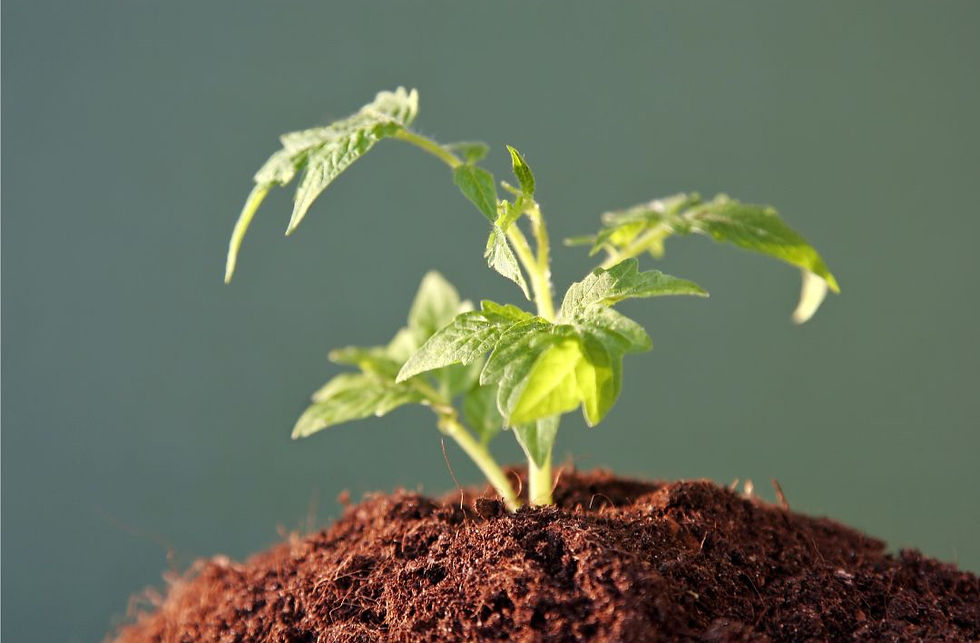
It looks like nothing and it feels like nothing. If you did not know better, you might think nothing important was happening at all. And then one day, a small green sprout breaks through the surface and that moment never gets old.
For a teen, this is such a powerful experience. They get to see that growth often begins invisibly. Something can be happening even when there is no evidence yet. A small action, repeated with care, can eventually become something real.
That is like leadership because leaders are often people who can imagine what does not exist yet. They can see possibility before others see proof. They can take a small idea and nurture it long enough for it to become something useful, beautiful, or meaningful.
When teens grow something from a seed, they experience that truth in their own hands. They learn that creation is not always loud. Sometimes transformation begins long before we can see it.

Leadership Lesson 2: Gardening Teaches Teens Patience Without a Lecture
Patience is one of those qualities every parent wants their teen to develop and every teen wishes parents would stop talking about.
A tomato seed does not sprout because someone says, “Be patient.” It simply takes the time it takes. For days, your teen may water the soil and see nothing. No applause, no progress bar, no notification saying, “Congratulations, your seed is 37% closer to sprouting.
They have to keep showing up before they see results. They have to trust the process before the process rewards them. They have to care for something that has not yet proven it will become anything.
So much of teen growth is like that too. Confidence does not appear overnight. Communication skills do not improve after one conversation. Emotional regulation, resilience, leadership, and self-trust all take time. Parents may not see the progress immediately, and teens may not feel it immediately, but something can still be growing under the surface.
Leadership Lesson 3: Gardening Teaches Responsibility in Real Time
A plant is wonderfully honest. If you forget to water it, it will tell you. It will droop, it will wilt. It will look at you with all its leaves and say, “I was depending on you.” That kind of feedback is immediate and very hard to argue with.
For teens, this is different from many responsibilities adults assign them. A parent can remind, lecture, negotiate, or explain. A plant simply responds to care or lack of care.
If your teen waters it, checks on it, moves it to better sunlight, protects it from too much heat, and notices when something looks wrong, the plant has a chance to thrive. If they ignore it completely, the plant struggles and that is responsibility in its simplest form.
It also teaches planning. What happens if the family goes on vacation? Who will water the plant? What if it rains too much? What if the soil dries out faster than expected? What if the pot is too small?
Suddenly, your teen is not just “doing gardening.” They are thinking ahead. They are adjusting. They are solving problems. They are caring for something outside themselves.

Leadership Lesson 4: Gardening Teaches Teens That Growth Is Not Always Perfect
This may be one of my favorite lessons. A garden is rarely perfect: leaves get holes, stems bend, some plants grow faster than others, some tomatoes look beautiful on one side and completely strange on the other. Sometimes you do everything right and still do not get the result you imagined.
For high-achieving teens, this can be surprisingly important. Many students are used to chasing perfect outcomes: perfect grades, perfect résumés, perfect performances, perfect responses, perfect plans. Gardening gently interrupts that mindset and shows them that growth is messy and still meaningful.
A crooked cucumber is still a cucumber, a small tomato still counts and a plant that struggled and recovered may teach more than the one that grew easily.
Leadership is not about controlling every outcome. It is about staying engaged, learning from what happens, adjusting with humility, and continuing to care even when the results are imperfect.

A Simple Summer Gardening Activity for Teens
So this summer, before filling every empty space on the calendar, try growing something with your teen.
I would start with tomatoes because they are simple, satisfying, and slightly dramatic in the best way. They grow visibly, they need attention, and when they finally produce fruit, it feels like a tiny celebration.
You do not need a large backyard or a perfect garden bed. A small container, a sunny spot works and a milk gallon with the top cut off can work if you make small drainage holes at the bottom.
How to Grow Tomatoes With Your Teen
You will need a disposable paper cup or small container, potting soil, a healthy tomato, and a larger planter for later. A one-gallon container, a proper planter, or even a clean milk jug with drainage holes can work.
Cut a slice from a healthy tomato so the slice has seeds in it. Place some potting soil in the cup or container, lay the tomato slice on top, cover it lightly with soil, and moisten it gently. Keep the soil moist over the next several days, not soaked, just moist.
After a week or so, you should begin to see tiny sprouts. Once the sprouts look strong enough, choose the healthiest one and move it into the larger planter. Cover the roots gently with potting soil, place it where it can get good sunlight, and keep caring for it.
Then comes the hardest and most important part.
Wait. Watch. Water. Adjust. Repeat.
The Real Leadership Lesson From Gardening for Teens
Of course, your teen may not suddenly look at the tomato plant and say, “Thank you, Mother/Father, I now understand the deeper meaning of responsibility and leadership.” That would be lovely, but unlikely.
They may roll their eyes, they may forget to water it. They may act uninterested and then secretly check on it when they think no one is watching. They may care more than they admit, and that is okay.
The lesson does not have to announce itself loudly to matter. Our job as parents is simply to place meaningful experiences in front of our children and let those experiences do their work. Not every lesson needs to be explained in the moment. Not every activity needs to become a formal teaching opportunity. Sometimes it is enough to grow something together and let the conversation unfold naturally.
Because underneath the soil, something is always happening and maybe that is the most important reminder of all. For tomatoes, for teens, and for us as parents, growth often begins before we can see it.


